


From Zero Reviews to Launch-Ready: How Beauty Brands Build Social Proof Before Day One

Beautytap Admin
Aug 3, 2026
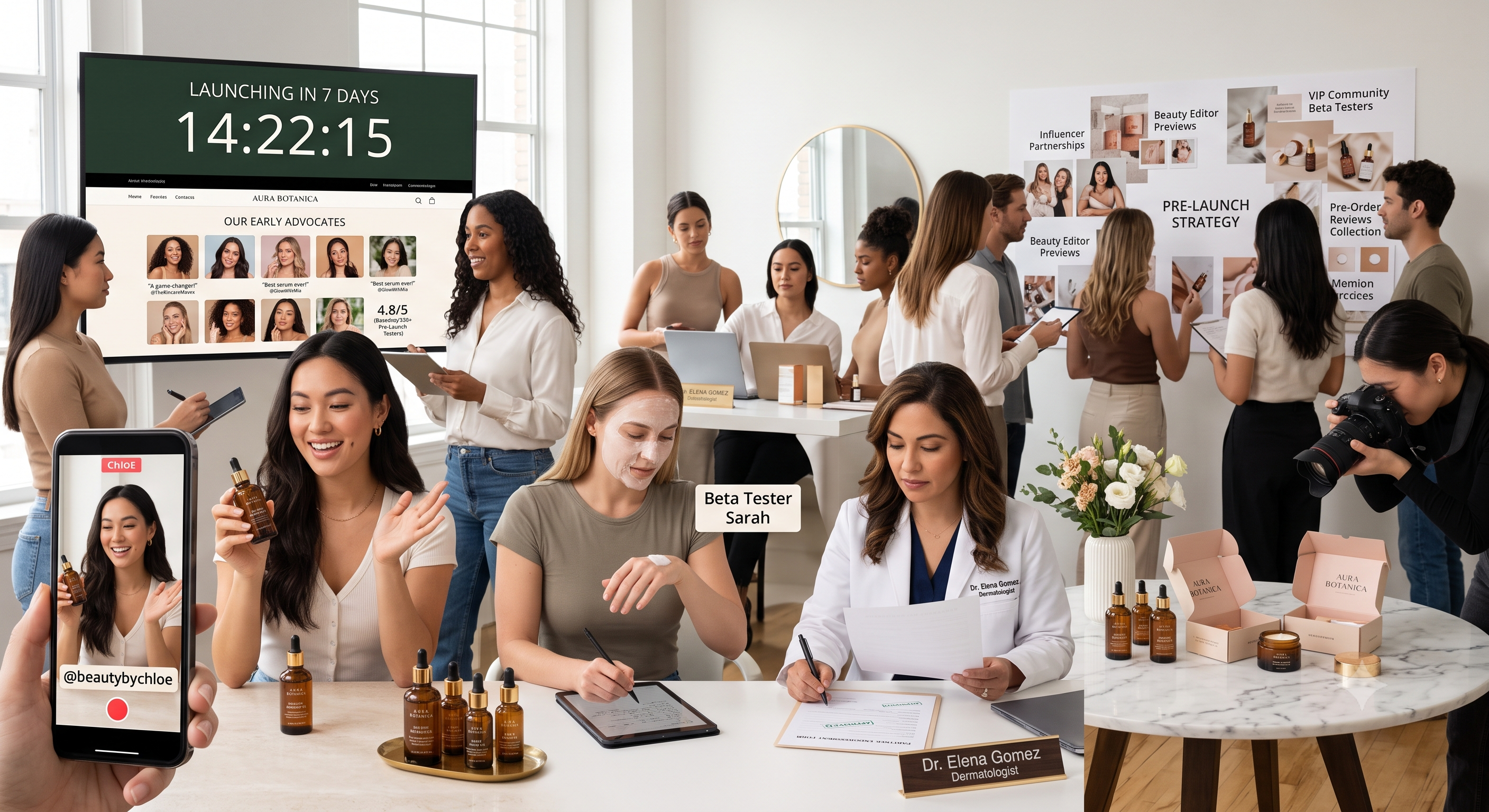
Every new beauty product starts with the same problem: zero reviews.
And zero reviews is a conversion killer. Not because consumers don't want to try new products — they do. But because the first thing any consumer does when they discover a product they've never heard of is look for evidence that someone else has already tried it.
When that evidence doesn't exist, most of them leave.
This is the credibility gap — the window between when a product launches and when it has accumulated enough organic social proof to overcome consumer skepticism. For brands that don't plan for it, this gap costs them the most valuable traffic they'll ever have: the first wave of consumers their launch budget sends to the PDP.
The brands that close this gap before launch day — instead of waiting for it to close itself — have a measurable and often decisive advantage.
Here's how they do it.
Why the credibility gap matters more than brands realize
Consider what a consumer actually experiences when they discover a new beauty product through a paid ad.
They see the ad. Something about it catches their attention — maybe a before-and-after result, a creator they follow, or a claim that speaks to a problem they've been trying to solve. They click through.
They land on the PDP. The product looks good. The copy is compelling. The photography is clean.
Then they scroll to the reviews section. And they see: "Be the first to review this product."
Most of them close the tab.
This is not a reflection of the product or the brand. It's a reflection of how consumer trust works. New products are inherently unproven. A consumer who buys a new product with no reviews is taking a risk — and most beauty shoppers are not looking to take risks. They're looking for confidence.
Reviews are what create that confidence. Not brand claims. Not photography. Not influencer endorsements. Reviews from real people who used the product, in their skin type, for their concern, and got a result they're willing to put their name on.
The organic review timeline problem
Left to itself, organic review generation for a new product is slow. Here's what the timeline typically looks like:
- Days 1–14: First purchasers receive the product. Most haven't used it long enough to have a meaningful opinion.
- Days 15–30: A small percentage of buyers leave reviews. Most don't, because leaving reviews requires effort and no one reminded them to.
- Days 30–60: A modest review volume begins to accumulate. Quality varies widely. Most reviews are short and generic — "love it!" or "didn't work for me" — without the depth that influences undecided shoppers.
- Days 60–90: The brand has enough reviews to not look empty. But the first two months of paid media have already run against a PDP that couldn't convert.
For brands spending $50,000 or more on launch paid media, the first 30–60 days of wasted conversion represent a real and recoverable cost. The traffic arrived. The product didn't close it.
What a review-ready PDP actually looks like
Before a single dollar of paid media drives traffic to a PDP, the review section should pass this test:
Volume: A minimum of 20–30 reviews. Below this threshold, shoppers are statistically less likely to trust the aggregate. The more the better, but 20 is the functional floor.
Depth: Reviews that go beyond star ratings and one-line reactions. A review that says "this moisturizer absorbed quickly without leaving a greasy residue, and my combination skin felt balanced all day" is worth ten reviews that say "great product."
Coverage: Reviews that represent the range of consumers who might buy. Different skin types. Different tones. Different ages and concern areas. A shopper with dry sensitive skin who sees only reviews from oily skin types doesn't find what she's looking for and leaves.
Credibility markers: Reviews that address hesitations — the common concerns a category-aware consumer would have about a new product. For a sunscreen, that might be white cast and feel. For a retinol, it might be irritation and purging. When these concerns are addressed proactively in reviews, they stop being barriers.
Helpfulness signals: Reviews that other shoppers mark as helpful are surfaced more prominently on most platforms. The depth that earns helpfulness votes is the depth that amplifies a review's influence.
A PDP that meets these criteria before launch doesn't just look credible — it functions as a conversion asset. The review section becomes the most persuasive element on the page.
How Beautytap's Review Rating program closes the gap
Beautytap's Review Rating program is built specifically to give beauty brands a review-ready PDP at launch — not 60 days after.
The program connects brands with Beautytap's community of 15,000+ vetted beauty enthusiasts and professionals. These are not anonymous platform users leaving quick impressions. They are trained reviewers with real category expertise who have used the product, understand how to evaluate it, and know how to write a review that is specific, honest, and useful.
The difference between a Beautytap-generated review and a typical organic review is depth. Beautytap reviewers cover:
- Application and texture: How did the product feel to use? What made it easy or difficult?
- Performance against the core claim: Did it deliver the benefit it promised? How quickly? How consistently?
- Skin type compatibility: Which skin types and conditions is this product best suited for?
- Comparison context: How does it stack up against what the reviewer has used before?
- Honest caveats: What are the limitations? Who might not love this?
This level of detail is what drives helpfulness votes. It's what surfaces the review in AI-powered sorting and summarization tools. And it's what gives an undecided shopper the specific information she needs to commit.
Reviews generated through Beautytap's program are also designed for syndication — ready to be distributed to retailer platforms so that whether a consumer finds the product on the brand's DTC site, at Sephora, at Ulta, or on Amazon, she finds the same depth of social proof wherever she looks.
The compounding effect of early reviews
There is a virtuous cycle that starts when a PDP has strong reviews at launch.
Strong reviews increase conversion rate. Higher conversion rate improves return on paid media. Better ROAS creates budget to scale media. More traffic brings more organic reviews. Organic reviews reinforce and expand the existing social proof.
The brands that enter this cycle from day one — because their PDP was ready before their media turned on — compound faster than brands that spend the first 60 days trying to build the foundation while simultaneously trying to drive sales.
Early social proof isn't just about the launch. It's about setting the trajectory for the first year of the product's life.
Reviews are not the whole launch strategy — but they are the foundation
Reviews close the credibility gap, but they work best as part of a connected launch system.
Perception Studies before launch ensure the review brief is built around the claims and consumer concerns that actually matter — because the research already identified them.
UGC Video alongside reviews provides the visual, dynamic proof that reviews can't — a real person, using the product in real time, showing rather than telling.
Paid Media amplifies the entire ecosystem — driving traffic to a PDP that can now actually convert, with review-backed creative that reinforces the social proof the consumer will find when they click through.
When these pieces are connected, each one makes the others work harder. That's the Beautytap model. Not piecemeal vendors for each function — a single partner who connects them all.
Starting the review strategy: what to do right now
If you have a launch planned in the next 60–90 days, here are the three questions to answer today:
What does our PDP look like right now? If a cold consumer landed on it today with no prior brand knowledge, would the review section give them the confidence to buy?
What are the top 2–3 hesitations a category-aware consumer would have about our product? Are those hesitations addressed somewhere visible on the PDP?
Do we have a plan to generate substantive reviews before our media turns on? If not, when does that plan need to start for reviews to be live at launch?
The brands that answer these questions early are the brands that launch with a conversion-ready PDP. The ones that answer them after launch are the ones trying to fix the foundation while the house is already built.
Ready to close the credibility gap before your next launch? Talk to Beautytap's brand team about the Review Rating program and how it fits your launch timeline.